The only tool that pulls
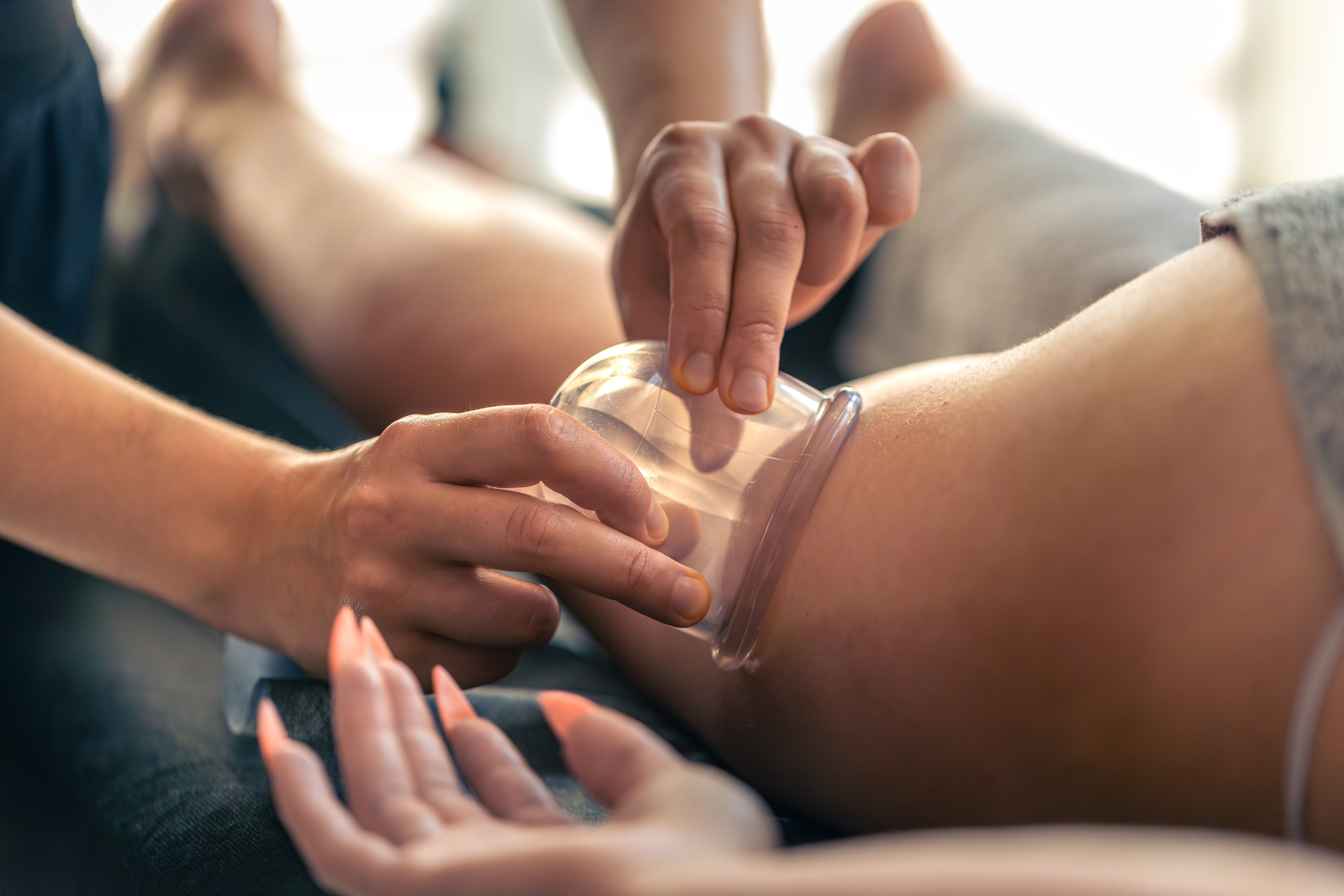
Consider what most soft tissue treatment has in common: thumbs, elbows, steel tools, foam rollers — all compression. Cupping inverts the equation. A cup is placed on the skin and air is drawn out, so the tissue inside the rim lifts. Skin separates slightly from superficial fascia, fascia from muscle, and fluid moves through tissue that has been sitting compressed and congested.
That lift does a few useful things at once: it brings a rush of blood to the area, it creates shear between tissue layers that have stopped gliding, and it gives the nervous system a strong, novel input that can dial down local sensitivity. With sliding cupping, the cup travels across lubricated skin, turning a single point of lift into a moving wave of decompression along a whole muscle group.
About those circles
The marks are the most famous thing about cupping, so let's be precise: suction draws a small amount of blood into the superficial capillaries, leaving a round discoloration that fades over days. It's a pressure mark, not extracted toxins and not a bruise from injury. Darker circles mean stronger suction or more reactive skin — not a more effective treatment. If you'd rather avoid visible marks for an event, tell us; suction strength is adjustable.
What the trials show
Cupping's evidence base has grown substantially, and it deserves a fair, unspun summary: real but modest short-term benefits for musculoskeletal pain, strongest for low back pain, with sham-controlled trials suggesting part of the effect rides on expectation. Used honestly — as an adjunct that makes tissue feel and move better so active care can proceed — it holds its place.
Across randomized trials of chronic musculoskeletal pain, cupping therapy reduced pain intensity versus control conditions in the short term.
View study →Pooled randomized controlled trials found cupping effective for reducing low back pain and improving function versus usual care.
View study →Against sham cupping, effects shrink — a reminder to use cupping as a supporting tool rather than a headline treatment.
View study →