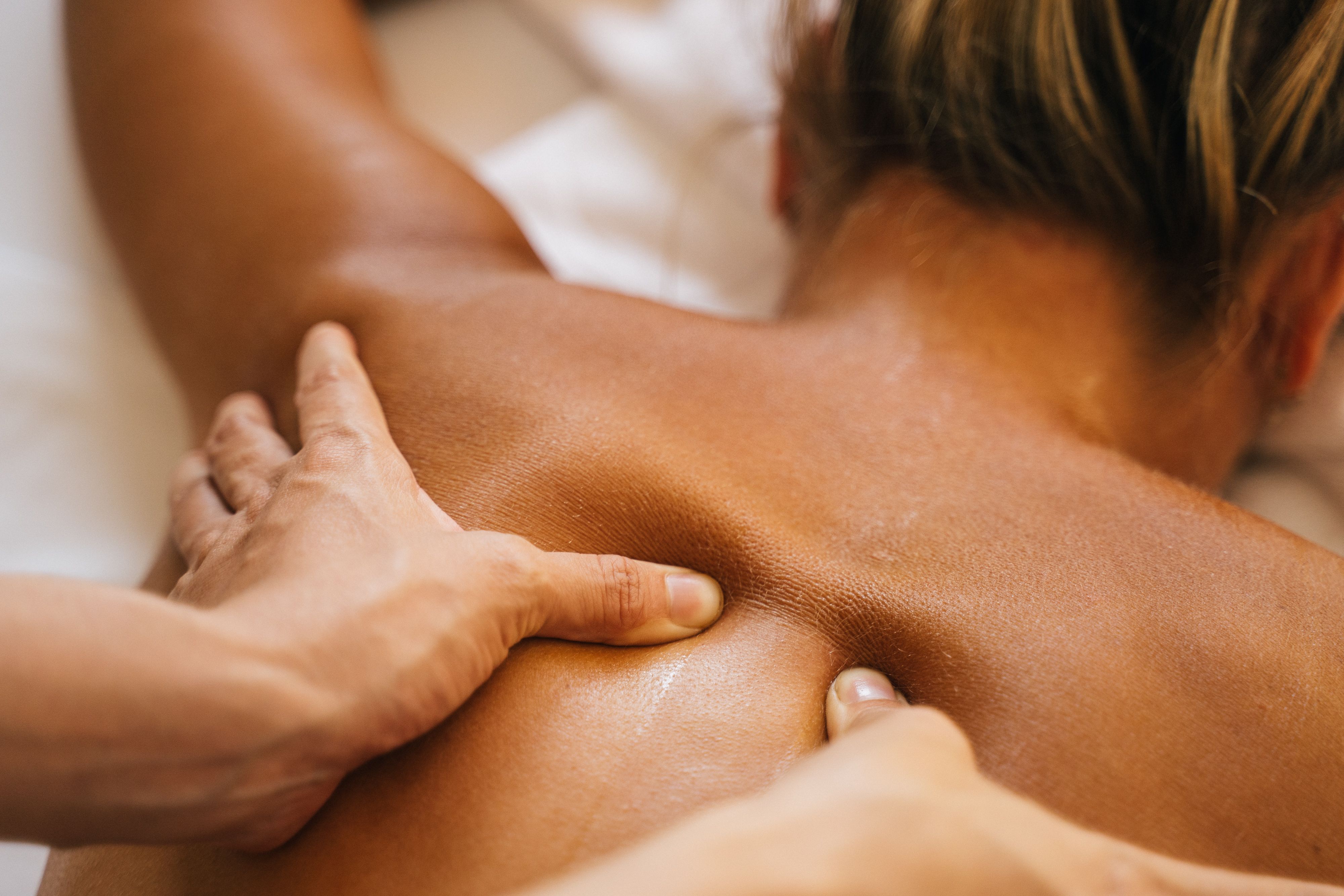
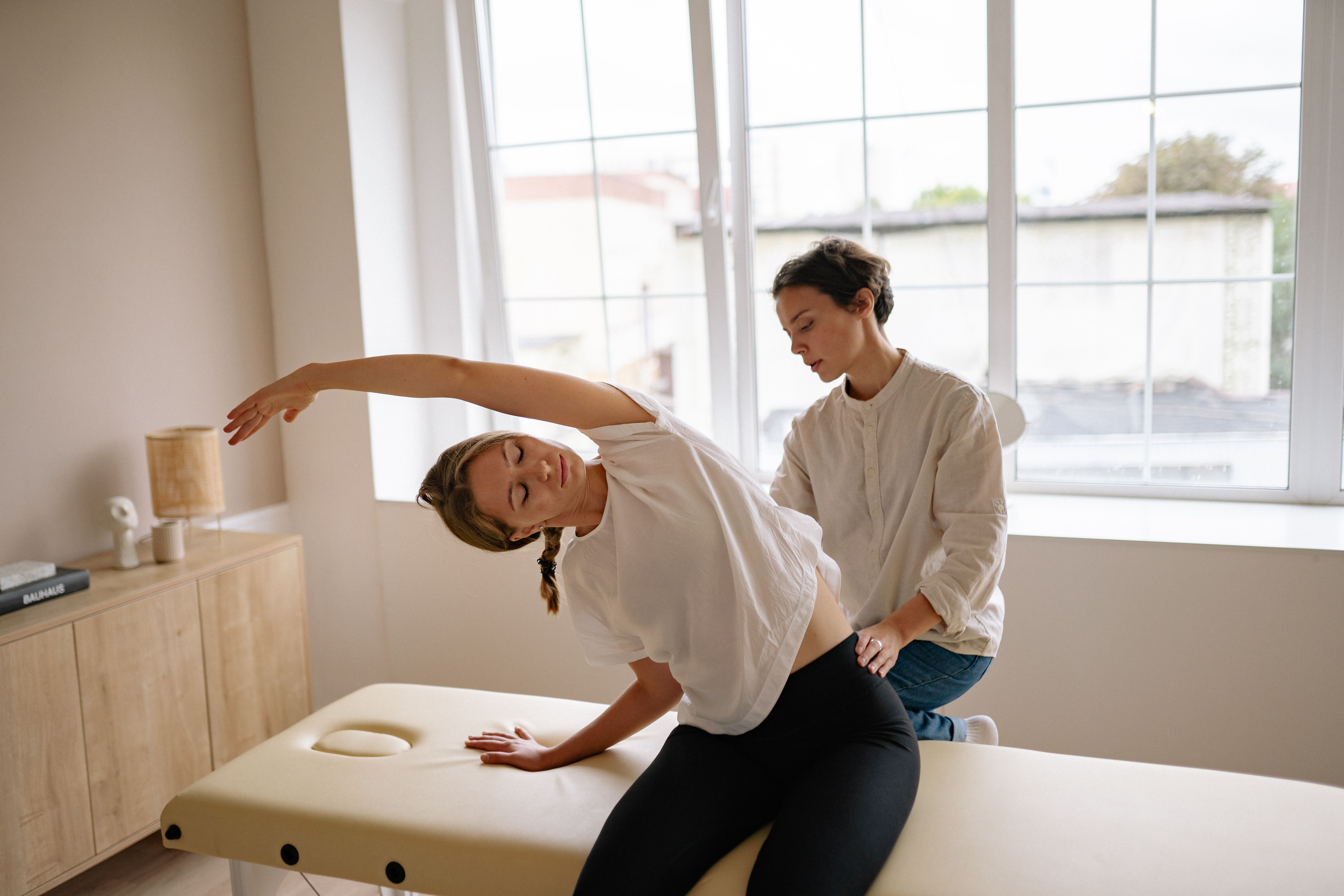
Hands are instruments — twice over
Before hands treat anything, they measure. A skilled clinician moving your joint through its range learns things no scan reports: which direction is stiff, which segment guards, what reproduces your symptom and what relieves it. Manual therapy starts as assessment, and the treatment that follows is aimed by what the assessment found.
Then the same hands become the treatment. Depending on what your joint needs, that might be mobilization — slow, rhythmic, graded oscillations that coax a stiff joint through range — or manipulation, a quick, precise impulse that often comes with the familiar pop. Around the joints, soft tissue techniques address the muscles and fascia that guard and tighten in response to joint problems.
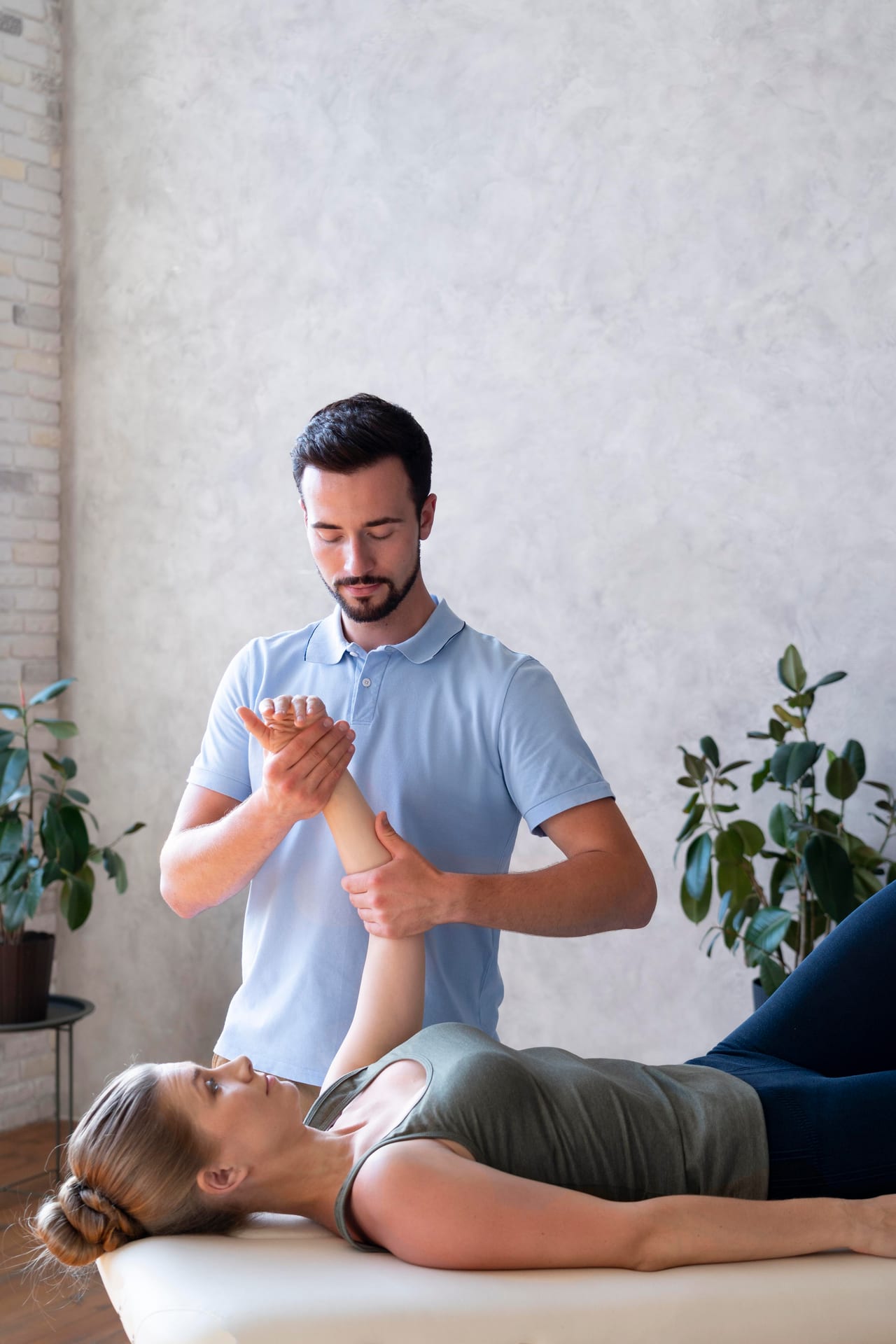
What hands-on treatment actually changes
Here's the current scientific understanding, without the mystique: manual therapy reduces pain sensitivity through the nervous system, decreases protective muscle guarding, and restores joint motion. What it does not do is put bones "back in place" — they weren't out — or permanently lengthen tissue in a single session. The changes are real but perishable, which is precisely why every hands-on technique in this clinic is followed by exercise that trains the body to keep the improvement.
The evidence for pairing it with exercise
Combining manual therapy with exercise improved pain and disability in nonspecific low back pain beyond either alone.
View study →Spinal manipulation and mobilization are evidence-supported options for low back and neck pain across systematic reviews.
View study →Musculoskeletal manipulations improved pain in patients with neck pain across randomized comparisons.
View study →Problems that respond well
- Stiff, guarded backs and necks — including the desk-shaped kind
- Shoulders that lost motion after injury or immobilization
- Jaw (TMJ) dysfunction and the headaches that ride along with it
- Hips and ankles whose restricted motion is loading other joints
- Post-surgical stiffness once tissue is ready for graded motion