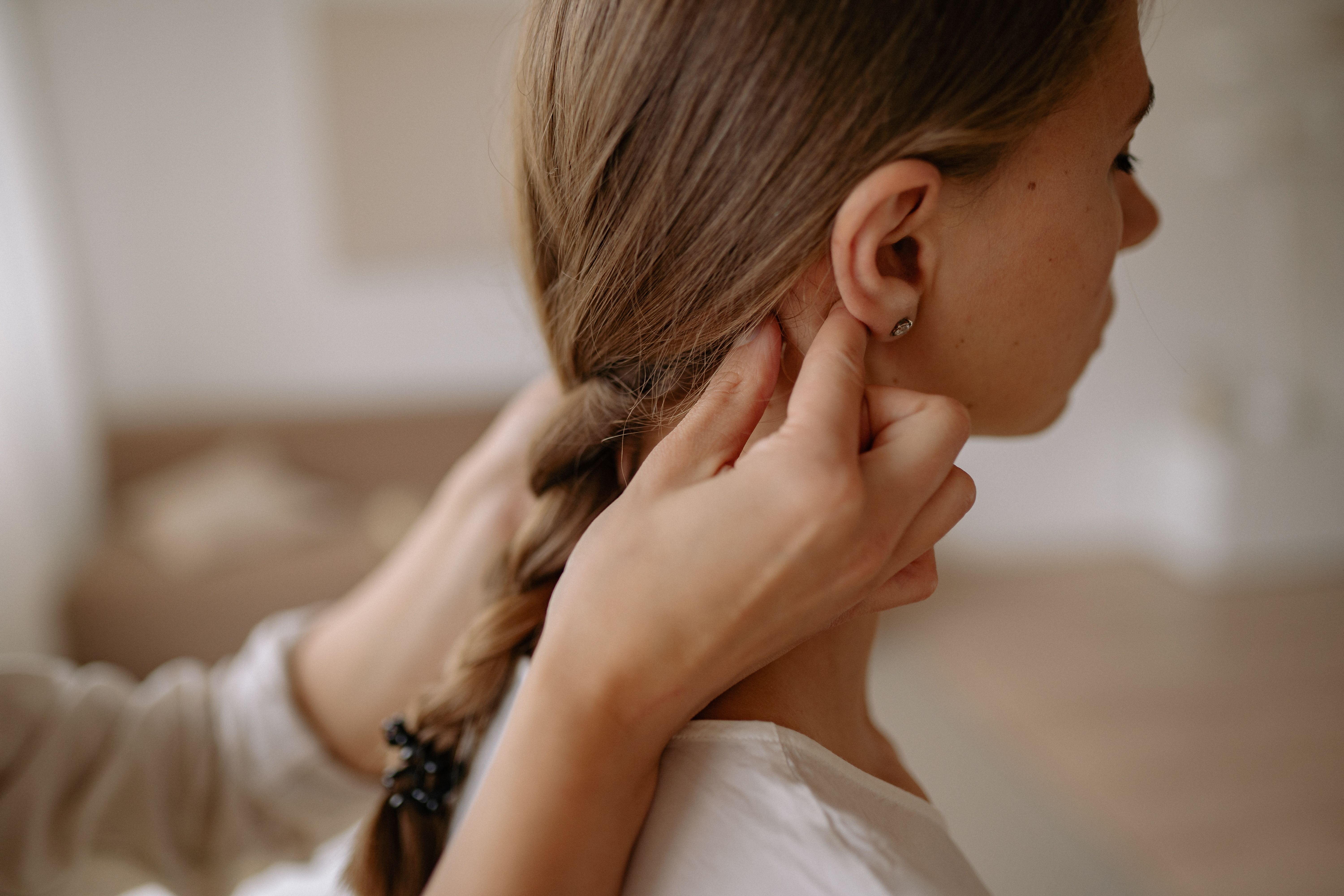
You might know it as...
- Clicking, popping, or a jaw that occasionally catches on opening
- Morning jaw tightness that says you clenched all night
- Headaches at the temple or behind the eye, worse as the day goes on
- Ear fullness or pain your doctor said wasn't an ear infection
- Chewing fatigue — steak and bagels have become commitments
- A neck that's tight on the same side the jaw complains
The jaw-neck partnership
Here's the anatomy that explains why jaw problems so often arrive with headaches: sensory nerves from the jaw and the upper neck feed into a shared relay station in the brainstem. Signals mingle there, which is why an irritated neck joint can refer pain to the temple, a jaw trigger point can masquerade as an earache, and forward-head posture can quietly load both systems at once. Treat only the jaw and you often miss half the problem — which is why our TMJ exam always includes the neck, and vice versa.
What treatment involves
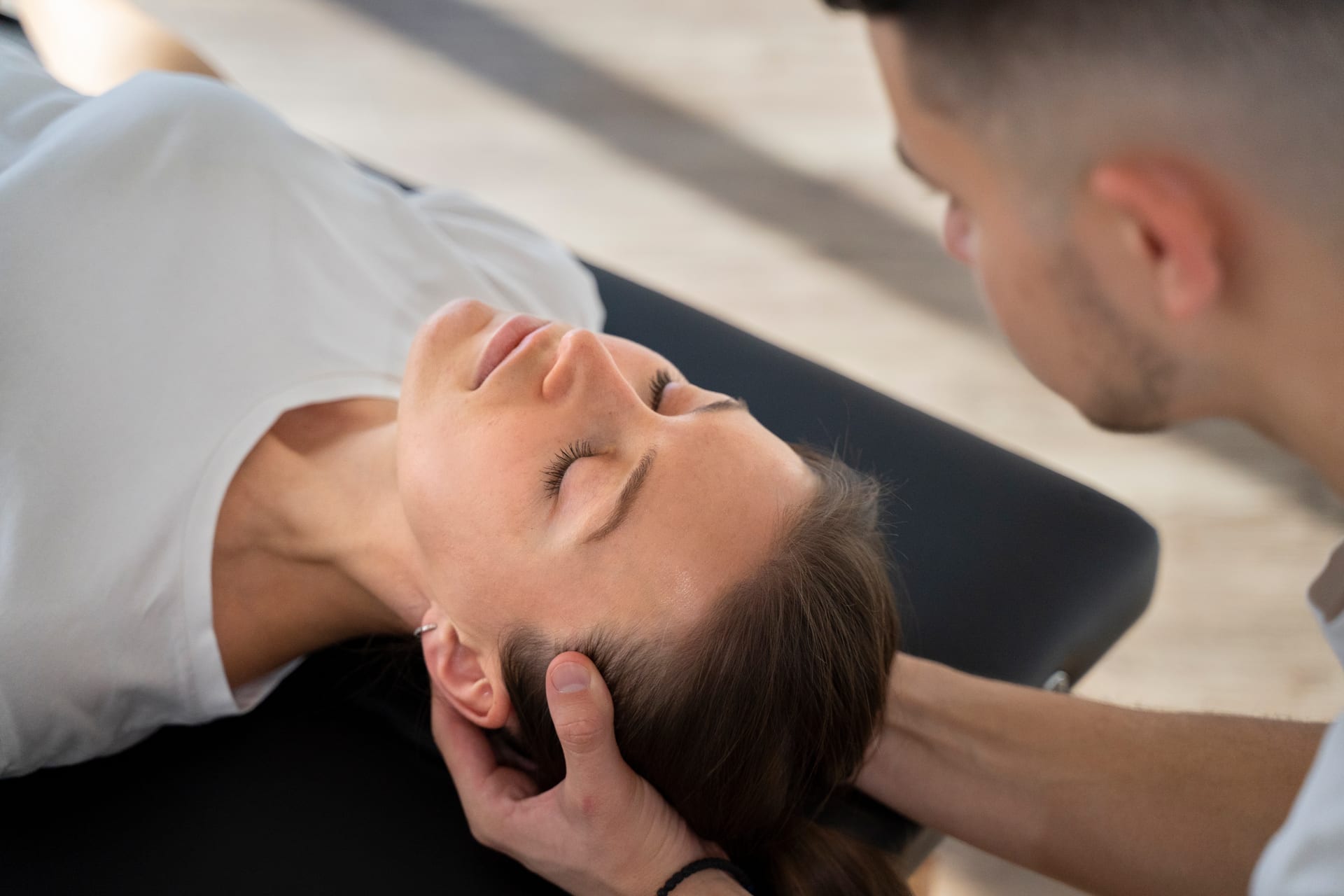
Depending on what your exam shows, care typically blends gentle hands-on work for the jaw joint itself (including intraoral techniques, always explained and always with your consent), treatment of the chewing and neck muscles — trigger point work and dry needling are frequently useful here — mobilization of stiff upper-neck segments, and retraining: jaw posture, tongue position, and the daytime clenching habit that most patients don't realize they have. The exercises are small and precise; the effect compounds.
The research picture
Systematic reviews of temporomandibular disorder consistently support conservative care — manual therapy and exercise — as first-line treatment, improving pain and mouth opening without the risks of irreversible interventions. For neck-driven (cervicogenic) headaches, the same combination is the backbone of evidence-based management.
Manual therapy and therapeutic exercise improved pain and mouth opening in temporomandibular disorders across randomized trials.
View study →