SPECIALTY

Vestibular & Concussion Rehab

Dizziness makes the world feel unreliable. The balance system is trainable — and most dizziness has a name, a cause, and a treatment.

AT A GLANCE

Your sense of balance is a three-way conversation between the inner ear, the eyes, and the neck. When any voice in that conversation goes wrong — crystals loose in an ear canal, a concussed brain mis-weighting its inputs, a noisy upper neck — you get vertigo, fog, or unsteadiness. Vestibular rehab identifies which system is failing and retrains it, from one-visit BPPV fixes to structured post-concussion recovery.

Not all dizziness is the same dizziness

Spinning with position changes — rolling over in bed, looking up at a shelf — points to BPPV: calcium crystals that have escaped into an inner-ear canal where they don't belong. Fog, motion sensitivity, and symptoms after a head knock point to post-concussion vestibular dysfunction — the hardware is intact, but the brain is mis-processing its balance inputs. Unsteadiness with neck pain or after whiplash suggests cervicogenic dizziness, where the upper neck is feeding bad position data into the system.

The distinctions matter because the treatments differ completely — a repositioning maneuver for one, graded retraining for another, neck treatment for the third. That's why the evaluation comes first, testing eyes, ears, neck, and balance systematically until your dizziness has a name.
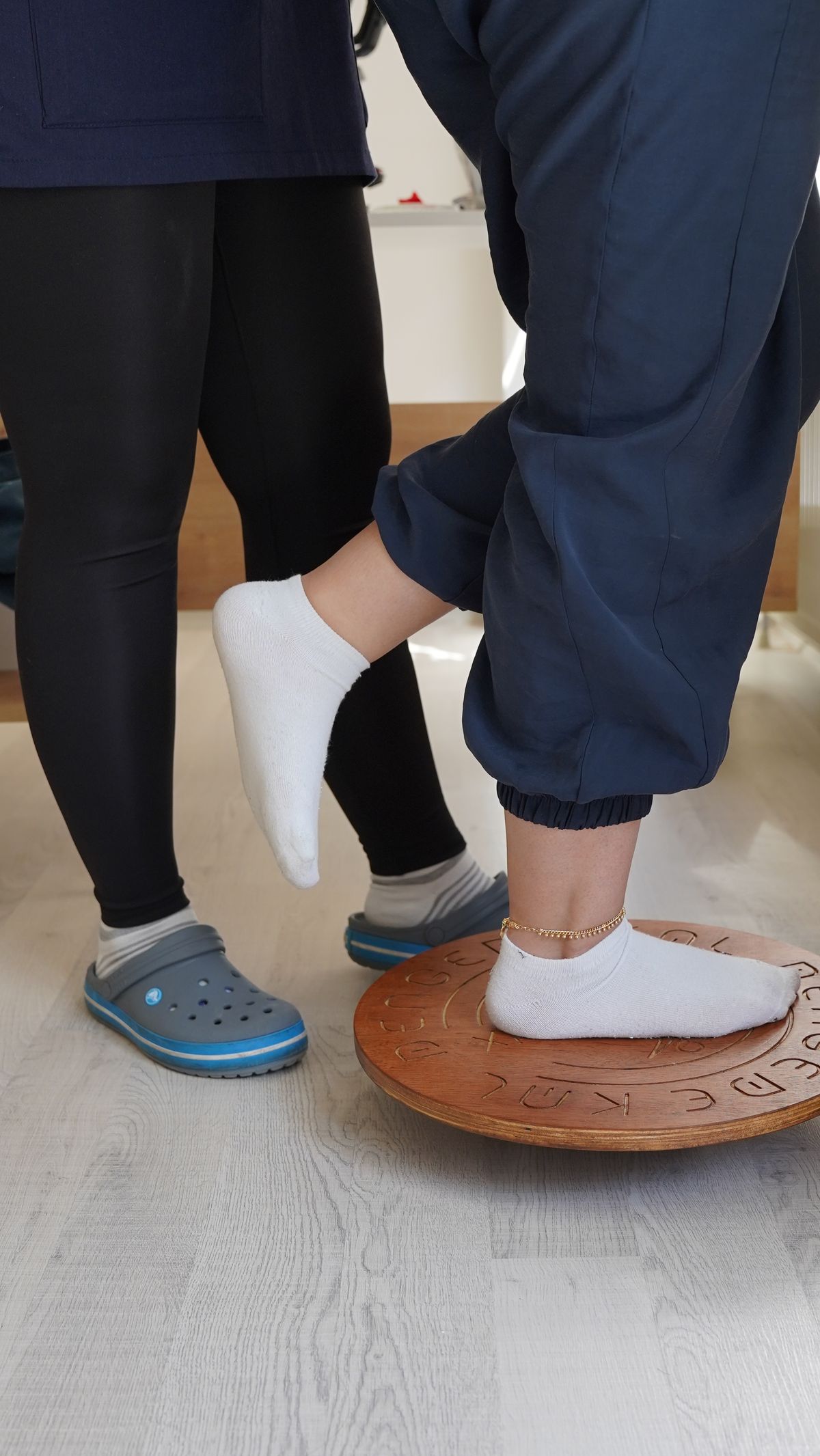
Balance training on an unstable surface
Balance is trainable — the system adapts to what it practices.

Retire the dark room

For years, concussion advice was to rest in a dim room until symptoms disappeared. The evidence has moved decisively past that: after a brief initial rest period, graded activity and targeted vestibular exercise outperform prolonged rest, and extended isolation can actually prolong symptoms. Recovery is active. Gaze stabilization drills, balance progressions, controlled motion exposure, and structured return of exercise tolerance — each dosed so the system adapts without being overwhelmed.

The evidence

COCHRANE REVIEW

Vestibular rehabilitation is safe and effective for vestibular dysfunction, with moderate-to-strong evidence across randomized trials.

View study →

Who we help

How we run vestibular care

Dizziness rehab is precise, sometimes briefly uncomfortable, and enormously rewarding when dosed well — which takes time and the same clinician every visit.

  • Sorted before treated: ear, brain, and neck each get screened, because the fix depends on the source.
  • BPPV treated on the spot: positive positional tests get repositioning maneuvers the same visit.
  • Symptoms dosed, not avoided: controlled exposure drives the recalibration — carefully titrated each session.
  • Return-to-life targets: driving, work screens, sport, and grocery-store aisles are the outcome measures that count.

Often paired with

Single-leg balance exercise
01 — SORT
Name the dizziness

Systematic testing of ear, eyes, neck, and balance to find the failing system.

02 — RECALIBRATE
Retrain the system

Repositioning maneuvers, gaze stabilization, and graded balance work.

03 — REBUILD TRUST
Back to full speed

Progressive return to driving, screens, sport, and everything dizziness took off the table.

Frequently asked questions

The room spins when I roll over in bed. What is that?+
That pattern — brief, intense spinning triggered by position changes — is the signature of BPPV, where loose crystals in the inner ear tumble into the wrong canal. It's one of the most satisfying things we treat: a positional test confirms which canal is involved, and a repositioning maneuver (like the Epley) guides the crystals back out, often resolving the vertigo in one to three visits.
It's been months since my concussion. Is it too late for rehab?+
No. Persistent post-concussion symptoms — dizziness, fogginess, motion sensitivity, exercise intolerance — respond to targeted rehab well after the injury. The old advice to rest in a dark room until symptoms vanish has been replaced: current evidence supports early, graded activity and vestibular exercises. Lingering symptoms usually mean systems that need retraining, not permanent damage.
Why do the exercises make me a little dizzy?+
Mild, short-lived symptoms during vestibular exercise are usually the point — the brain recalibrates by being exposed to controlled doses of the movement it's mishandling, the way strength returns by lifting manageable weight. We dose it carefully: enough challenge to drive adaptation, never so much that you're wiped out afterward.
Could my dizziness be coming from my neck?+
It can — the upper neck feeds position information into the same balance network as the inner ear, and after whiplash or with chronic neck tension, that input gets noisy. Cervicogenic dizziness usually feels like unsteadiness or fog rather than spinning, and it responds to neck treatment. Our exam screens the ear, eyes, and neck to sort out which system is responsible.
ONE PATIENT, ONE HOUR, ONE FOCUS

Get the world to hold still again.

Vestibular and concussion rehab in one-on-one sessions — no referral needed in Idaho.

Ryan Zumwalt
DPT · DOCTOR OF PHYSICAL THERAPY

Ryan Zumwalt, DPT practices at Post Falls Physical Therapy in Post Falls, Idaho, where every session is one-on-one with the same Doctor of Physical Therapy.

SOURCES

  1. McDonnell MN, Hillier SL. Vestibular rehabilitation for unilateral peripheral vestibular dysfunction. Cochrane Database Syst Rev. cochranelibrary.com
  2. Direct Access Laws by State. WebPT. webpt.com