TECHNIQUE

Vasopneumatic Compression

A rolling squeeze that milks swelling out of a limb, chamber by chamber. Useful, comfortable, and honest about what it can do.

AT A GLANCE

Vasopneumatic (intermittent pneumatic) compression uses sleeves with sequential air chambers that inflate from the far end of the limb upward, pushing pooled fluid back toward circulation. In rehab it earns its place controlling post-surgical and post-activity swelling and easing soreness — which keeps the active parts of your program on schedule.

Swelling is not just puffiness

A swollen joint is a sabotaged joint. Fluid pressure inside and around a knee or ankle does more than stretch the skin — it reflexively inhibits the muscles that cross the joint. This is why a swollen knee's quadriceps won't fire properly no matter how hard you try, and why swelling control is a performance issue, not a comfort issue. Every day a limb stays swollen is a day the strengthening part of rehab underperforms.

Your body clears swelling through the venous and lymphatic systems, both of which rely on movement and muscle contraction as their pumps. Early after surgery or injury — precisely when swelling peaks — you're moving least. That's the gap pneumatic compression fills: it becomes the pump you can't yet be.

A squeeze with a direction

The sleeve wraps the limb in a series of chambers. They inflate in sequence — foot first, then calf, then thigh — creating a wave of pressure that travels toward the heart, exactly the direction pooled fluid needs to go. Then everything deflates, fresh blood flows in, and the cycle repeats. Fifteen to twenty minutes of that, and a limb that felt tight and heavy usually looks and feels visibly different.
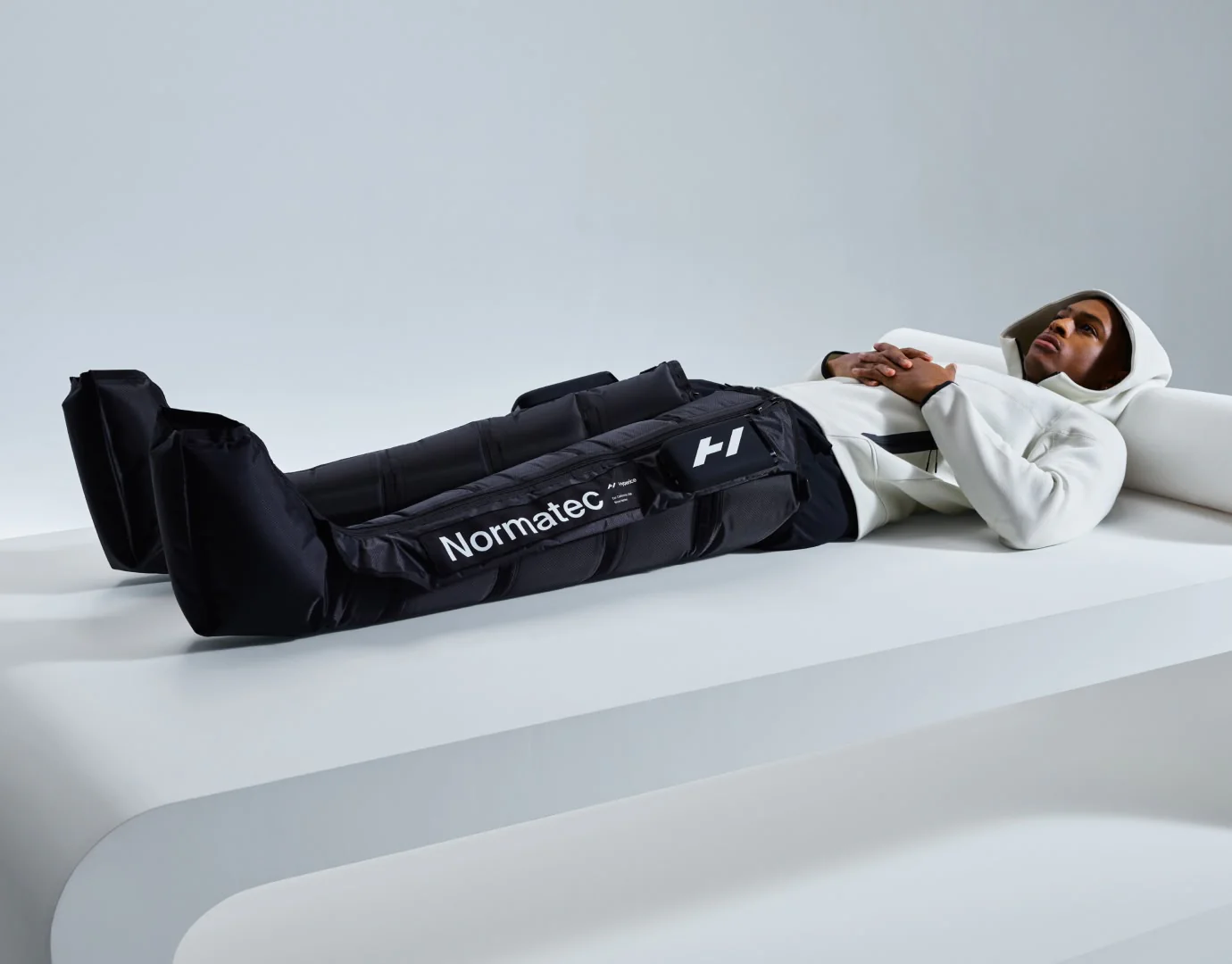
Pneumatic compression boots on a patient's legs
Chambers inflate in sequence, moving fluid up and out of the limb.

What the studies support

The research on pneumatic compression clusters around recovery: reduced perceived soreness and muscle heaviness, modest improvements in markers of exercise-induced muscle damage, and effective swelling management. It's a legitimate recovery and swelling tool — not a treatment that changes tissue structure. We're comfortable with that distinction, and we program it accordingly.

META-ANALYSIS · SPORTS RECOVERY

Across trials of lower-limb pneumatic compression, recovery outcomes — especially perceived soreness — improved versus passive rest.

View study →
RCT EVIDENCE · MUSCLE DAMAGE

Intermittent pneumatic compression reduced markers of exercise-induced muscle damage in endurance athletes.

View study →
Where the boots fit here

Compression is dessert, not dinner. It closes out sessions where swelling or soreness is the limiting factor — after the assessment, hands-on work, and loading are done.

  • Post-surgical swelling control: knees and ankles that balloon by evening get a head start on clearing fluid.
  • Flare management: after a hard session or a setback, compression helps you show up ready for the next one.
  • Paired with elevation and movement: we stack the strategies that move fluid rather than relying on one.
  • Screened first: clot history and vascular health checked before the first session.

Often paired with

Physical therapy session in the clinic
01 — WORK
Earn the recovery

The active portion of your session comes first — compression never replaces it.

02 — CLEAR
Move the fluid

15-20 minutes of sequential compression to flush the limb.

03 — REPEAT READY
Protect the schedule

Less swelling and soreness means the next session starts where it should.

Frequently asked questions

Do the compression boots actually work, or do they just feel nice?+
Both, honestly. The measurable effects are on swelling and perceived soreness/heaviness — meta-analyses show real benefit for recovery perception and fluid movement. Claims beyond that (permanent tissue change, injury cure) outrun the evidence. We use them for what they're good at: managing swelling and helping you tolerate the active work that drives recovery.
When are the boots most useful in rehab?+
Post-surgical limbs that swell by afternoon, ankles and knees that puff up after activity, and heavy training weeks where soreness limits your next session. Swelling isn't cosmetic — a swollen joint inhibits the muscles around it, so controlling it makes the rest of rehab work better.
What does a session involve?+
You sit back, the sleeve zips on, and the chambers inflate in sequence from your foot upward — a rolling squeeze most people find genuinely relaxing. Sessions run 15-20 minutes, typically at the end of a visit after the active work is done.
Is compression therapy safe for everyone?+
Not everyone. Active blood clots or suspected DVT, certain vascular diseases, uncontrolled heart failure, and some skin conditions rule it out. Your therapist screens for these before the first session — one more reason this belongs in a clinic rather than an unscreened recovery lounge.
ONE PATIENT, ONE HOUR, ONE FOCUS

Swelling slowing your recovery down?

Compression therapy inside a real plan of care — no referral needed in Idaho.

Ryan Zumwalt
DPT · DOCTOR OF PHYSICAL THERAPY

Ryan Zumwalt, DPT practices at Post Falls Physical Therapy in Post Falls, Idaho, where every session is one-on-one with the same Doctor of Physical Therapy.

SOURCES

  1. Effects of lower-limb intermittent pneumatic compression on sports recovery: A systematic review and meta-analysis. ncbi.nlm.nih.gov
  2. The Effects of Intermittent Pneumatic Compression on the Reduction of Exercise-Induced Muscle Damage in Endurance Athletes. J Sport Rehabil. journals.humankinetics.com
  3. Intermittent Pneumatic Compression and Cold Water Immersion Effects on Physiological and Perceptual Recovery. ncbi.nlm.nih.gov