TECHNIQUE

Blood Flow Restriction

After surgery, muscle doesn't wait politely for you to heal — it leaves. BFR is how we fight for it when heavy lifting is off the table.

AT A GLANCE

A regulated pneumatic cuff partially restricts blood flow to a working limb while you exercise with light weights — and your muscle responds as if the weights were heavy. For post-surgical knees, irritable tendons, and anyone who needs strength without joint stress, BFR delivers the stimulus that light rehab exercise alone can't. Screened, calibrated, and supervised at every step.

The problem BFR solves

There's a brutal window after surgery or serious injury: your quad (or calf, or hamstring) is wasting measurably by the week, but the tissue that was repaired can't yet tolerate the heavy loads that normally build muscle. Traditional rehab bridges the gap with light exercise — which protects the repair but barely slows the muscle loss. That early strength deficit is one of the stronger predictors of a slow, incomplete recovery.

Blood flow restriction closes the gap from the other direction: it makes light exercise count as heavy.

What the cuff actually does

An inflatable cuff — the medical-grade cousin of a blood pressure cuff — is placed at the top of the limb and inflated to a pressure calibrated to you. Arterial inflow continues; venous outflow is partially held back. Exercising in that environment, the muscle floods with metabolic byproducts and runs short on easy oxygen, so the nervous system escalates: it recruits the big fast-twitch fibers that normally sit out light work, and the metabolic stress triggers the same growth signaling as heavy training. Meanwhile the actual load on your healing joint or tendon stays at 20-30% of maximum.
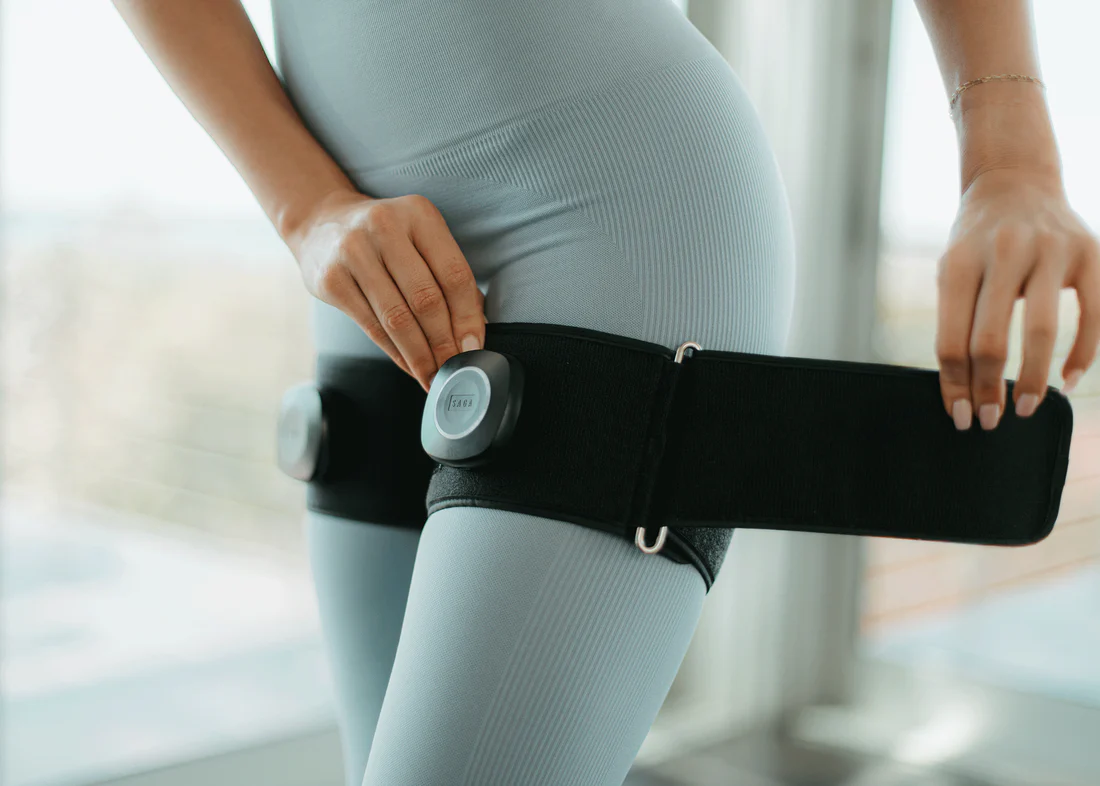
Blood flow restriction cuff applied during rehab exercise
Calibrated pressure, light load, near-maximal stimulus.

What the research shows

SYSTEMATIC REVIEW · MSK REHAB

Across musculoskeletal disorders, BFR training produced strength gains comparable to conventional resistance programs — at far lower loads.

View study →
SYSTEMATIC REVIEW · POST-SURGICAL

In post-surgical patients, low-load BFR improved early strength and muscle preservation versus standard low-load rehab alone.

View study →
META-ANALYSIS · OLDER ADULTS

In older individuals, BFR produced meaningful strength and muscle gains at loads gentle enough for aging joints.

View study →

Safety, since you're wondering

Deliberately restricting blood flow sounds alarming, so here's the straight answer: in screened patients, with regulated cuffs and professional supervision, reviews spanning thousands of participants report adverse event rates comparable to ordinary exercise. The three words that matter are screened, regulated, and supervised. We check clotting and vascular risk factors before the first session, pressures are calibrated per limb rather than guessed, and nobody trains under a cuff here without a Doctor of Physical Therapy present.


BFR in a Post Falls plan of care

BFR is a phase, not a philosophy. It carries the strength work while tissue can't take load — and hands off to conventional lifting the moment it can.

  • Screening first: clotting history, vascular health, and medications reviewed before any cuff goes on.
  • Individually calibrated pressure: measured per limb with regulated equipment — never a guess.
  • Supervised every set: one-on-one sessions mean the dose adjusts in real time.
  • A planned exit: as tolerance returns, BFR tapers out and progressive loading takes over.

Often paired with

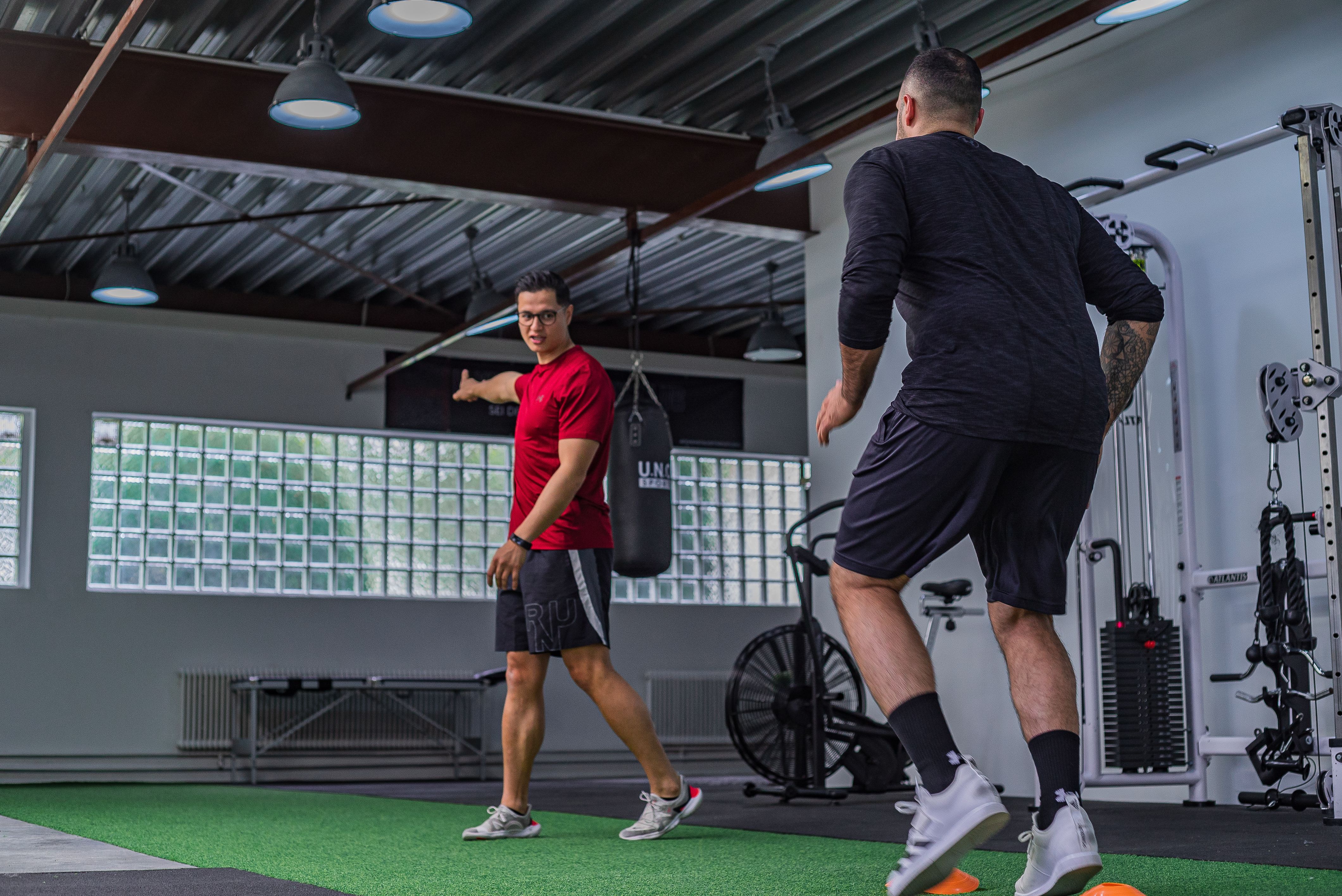
Training area at Post Falls Physical Therapy
01 — SCREEN
Clear the runway

Risk screening and limb-specific pressure calibration before the first rep.

02 — PRESERVE
Fight the atrophy

Light-load BFR work delivering a heavy-load stimulus while tissue heals.

03 — TRANSITION
Return to real load

A planned handoff to conventional strength training as tolerance returns.

Frequently asked questions

How can lifting light weights make me stronger?+
The cuff changes the math. With venous outflow partially restricted, the working muscle fills with metabolites and runs out of easy oxygen, forcing recruitment of the large fast-twitch fibers that normally only heavy loads reach. Your muscle experiences a near-maximal training stimulus while your joints and healing tissue only experience 20-30% loads.
Is restricting blood flow on purpose actually safe?+
With screening, regulated equipment, and supervision — yes. Reviews across thousands of participants report adverse event rates similar to regular exercise. We screen for clotting history and vascular risk first, use medical-grade cuffs with individually calibrated pressures, and a Doctor of Physical Therapy supervises every set.
What does a BFR set feel like?+
The cuff feels snug, like a firm blood pressure reading. The exercise itself starts easy and then the burn arrives fast — the fatigue of the last reps of a heavy set, showing up at a fraction of the weight. It ends the moment the cuff deflates. Sharp pain, numbness, or tingling are stop signals we act on immediately.
Who is BFR most useful for?+
Anyone who needs a strength stimulus but can't tolerate heavy load: post-surgical patients protecting a repair, painful tendons and joints that flare under load, and older adults for whom heavy lifting isn't realistic. Athletes also use it to add training volume without additional joint stress.
ONE PATIENT, ONE HOUR, ONE FOCUS

Don't let the recovery window close on your strength.

Screened, supervised BFR inside one-on-one sessions — no referral needed in Idaho.

Ryan Zumwalt
DPT · DOCTOR OF PHYSICAL THERAPY

Ryan Zumwalt, DPT practices at Post Falls Physical Therapy in Post Falls, Idaho, where every session is one-on-one with the same Doctor of Physical Therapy.

SOURCES

  1. Effects of blood-flow restricted exercise versus conventional resistance training in musculoskeletal disorders. BMC Sports Sci Med Rehabil, 2023. link.springer.com
  2. Effects of Low Load Blood Flow Restriction Training on Post-Surgical Musculoskeletal Patients: A Systematic Review. Appl Sci, 2025. mdpi.com
  3. Effects of Blood Flow Restriction Training on Muscular Strength and Hypertrophy in Older Individuals: A Systematic Review. ncbi.nlm.nih.gov